Black History on the PLUS Side: Donna Summer
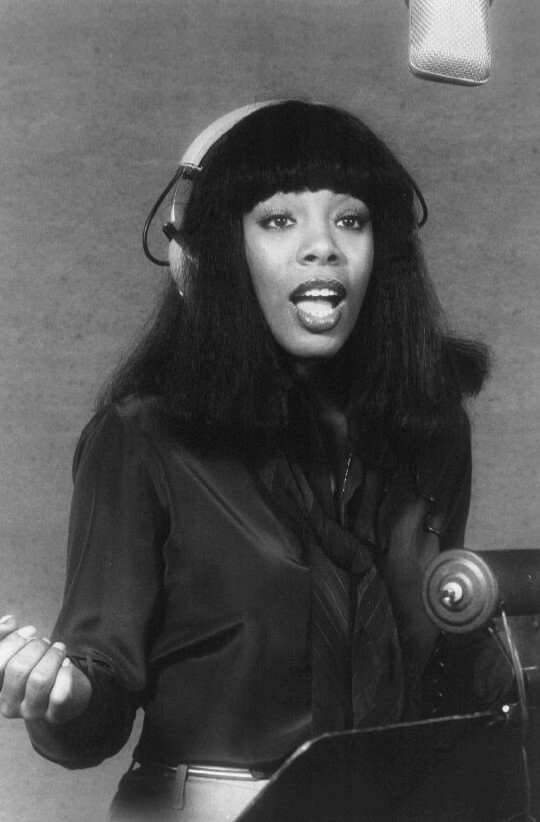
Donna Summer By Casablanca Records. License: Public domain
Donna Summer: From Mission Hill to the Blueprint of Modern Black Dance Music
By: Anytza Delgado
Before she was the Queen of Disco, before Studio 54 and global superstardom, Donna
Summer was LaDonna Adrian Gaines, born December 31, 1948, in Mission Hill, Boston, and
raised between Mission Hill and Dorchester in a working-class Black neighborhood shaped by
gospel music. Church was her first stage. The choir taught her breath control, phrasing, and emotional restraint. Even decades later, when synthesizers pulsed beneath her voice, that gospel discipline remained. Boston gave her foundation. The world gave her scale.
By the late 1960s, Summer had dropped out of high school and left for New York and
eventually Germany, performing in theatre productions like Hair. Europe became the laboratory
for her first reinvention. In 1973, she released her first single under the name Donna Summer,
“The Hostage.” The song tells the story of a woman whose husband has been kidnapped and is
being held for ransom. It unfolded like a cinematic mini-drama set to music and charted in parts
of Europe, signaling international potential long before American audiences caught up.
Then came 1975’s “Love to Love You Baby,” the sensual slow burn that made her a
global name. But it was 1977’s “I Feel Love” that permanently altered the structure of popular
music.
“I Feel Love” stripped disco down to something futuristic and mechanical. Built almost
entirely on a looping synthesizer pattern produced by Giorgio Moroder, the track sounded like
nothing else on radio at the time. Over it, Summer’s voice floated, intimate and controlled.
The record became a blueprint for house and techno. Its electronic pulse has been
sampled, interpolated, and reimagined for decades.
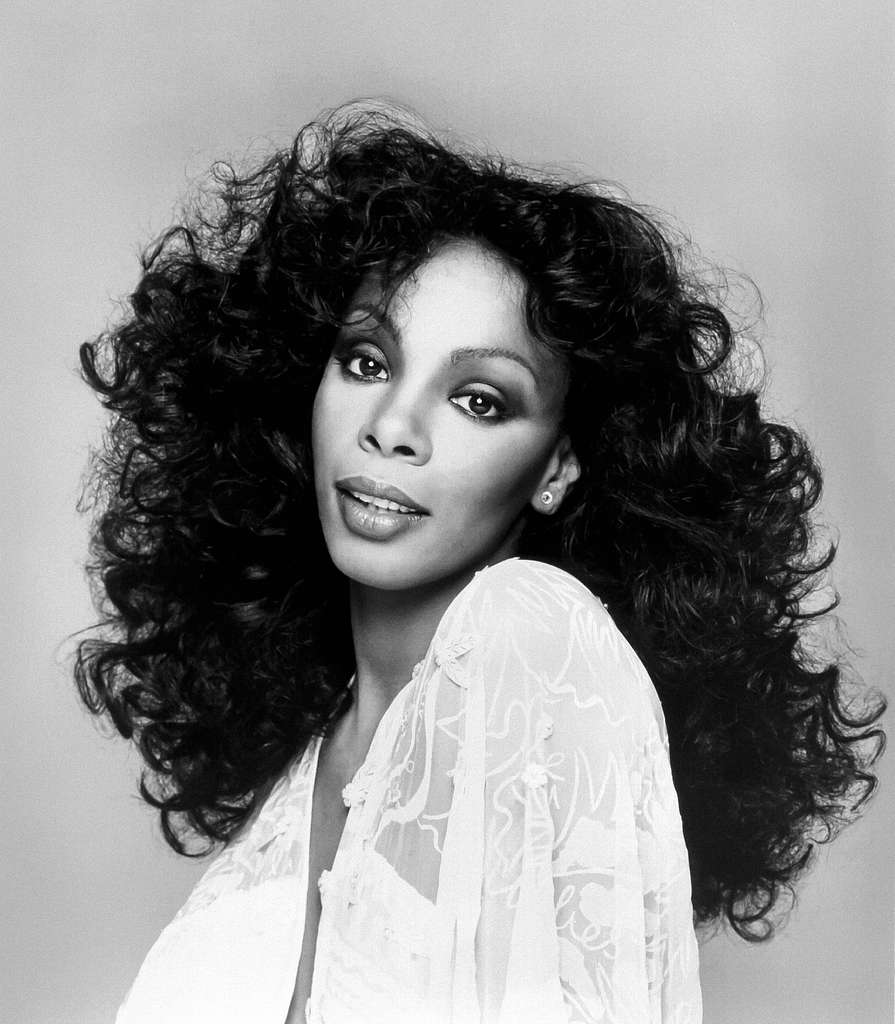
Donna Summer (1977 Casablanca publicity headshot)
Date 1977 Source: Wikimedia Commons http://commons.wikimedia.org/
Summer would go on to win five Grammy Awards out of 18 nominations, crossing
genres effortlessly across disco, rock, pop, and R&B. At a time when Black women in
mainstream music were often confined to narrow lanes, she built a catalog that resisted
limitation. When disco’s commercial peak faded, her influence did not.
Donna Summer’s catalog became embedded in the evolution of Black and Brown music,
particularly in hip-hop and R&B. The sensual groove of “Love to Love You Baby” resurfaced in
1990 when Digital Underground built “Freaks of the Industry” around its rhythm, pulling
Summer’s disco into West Coast hip-hop’s playful, funk-driven landscape.
By the late 1990s, TLC drew from “Love to Love You Baby” on “I’m Good at Being
Bad,” anchoring their own exploration of confidence and sensuality in Summer’s earlier
template.
Decades later, that lineage became explicit again when Beyoncé interpolated “I Feel
Love” on “Summer Renaissance” from her 2022 album Renaissance.
The project centered Black and queer dance culture and placed Summer’s architecture directly
inside a modern reclamation of club music.
“Bad Girls,” released in 1979, carried a streetwise defiance and rhythmic stomp that hip-
hop producers would later absorb. Its attitude and percussive structure echo in the confidence of
Black women in rap and R&B who command space over club-driven production. Even when not
directly sampled, its DNA is present. Disco was born in Black, Brown, and LGBTQ+
communities long before it was commodified. Hip-hop later mined disco crates for drum breaks
and basslines. In that ecosystem, Donna Summer’s records were not relics. They were source
material.
Sampling in that tradition was not imitation. It was continuation. The house revivals, the
neo-soul layered over electronic beats, the R&B artists blending groove with vulnerability all
carry structural elements Summer helped normalize. The four-on-the-floor heartbeat of modern
house. The hypnotic looping synth in contemporary dance tracks. The sensual restraint layered
over rhythmic propulsion.
That architecture traces back to Mission Hill. Donna Summer passed in 2012 from lung cancer, but her blueprint remains intact. Every time a Black artist samples her catalog, every time a DJ drops a disco loop into a hip-hop set, every time a dance floor pulses under a synth line that feels endless, her influence is present.
For Black History Month on ERS+, Donna Summer is not simply the Queen of Disco;
she is one of the architects of the music we are still dancing to.
Fitness
Lizzo incorporates Donna’s famous disco rolling line, “Toot toot, hey, beep beep,” in her track about doing fitness for the most important person in her life, Lizzo. Fitness is a self affirming inner positivity anthem used in order keep herself both vicious and independent.
Listen here
Zoom
From the Bullworth Soundtrack by Dr. Dre and LL Cool J, this uniting of G.O.A.T.S. from opposite coasts rocks this from 1998. The sample is from Donna Summer’s freeing love track, ‘Love To Love You Baby.’ Summer’s sentuous loop sample seamlessly carries the melodic Dre chorus as he lays a heavy verbal ‘Zoom, Zoom, Zoom,’ shaking lyric over his signature thumping beat chorus.
Listen here
Black Folks
Queensbridge rapper Nas, rocks the mic effortlessly gliding his smooth vocals over Donna’s the ‘Love To Love You,’ bassline. The song paints a potrait of a street hustler’s neighbood rise, fall and, regret as only Nas can. This 2017 grim tale gets a club uplifiting bump for suped up car sound system in special part thanks to Summer’s funky rhythm track loop.
Listen here.