The Urban Adoption of Timbs: Transcending Fashion Through Hip Hop
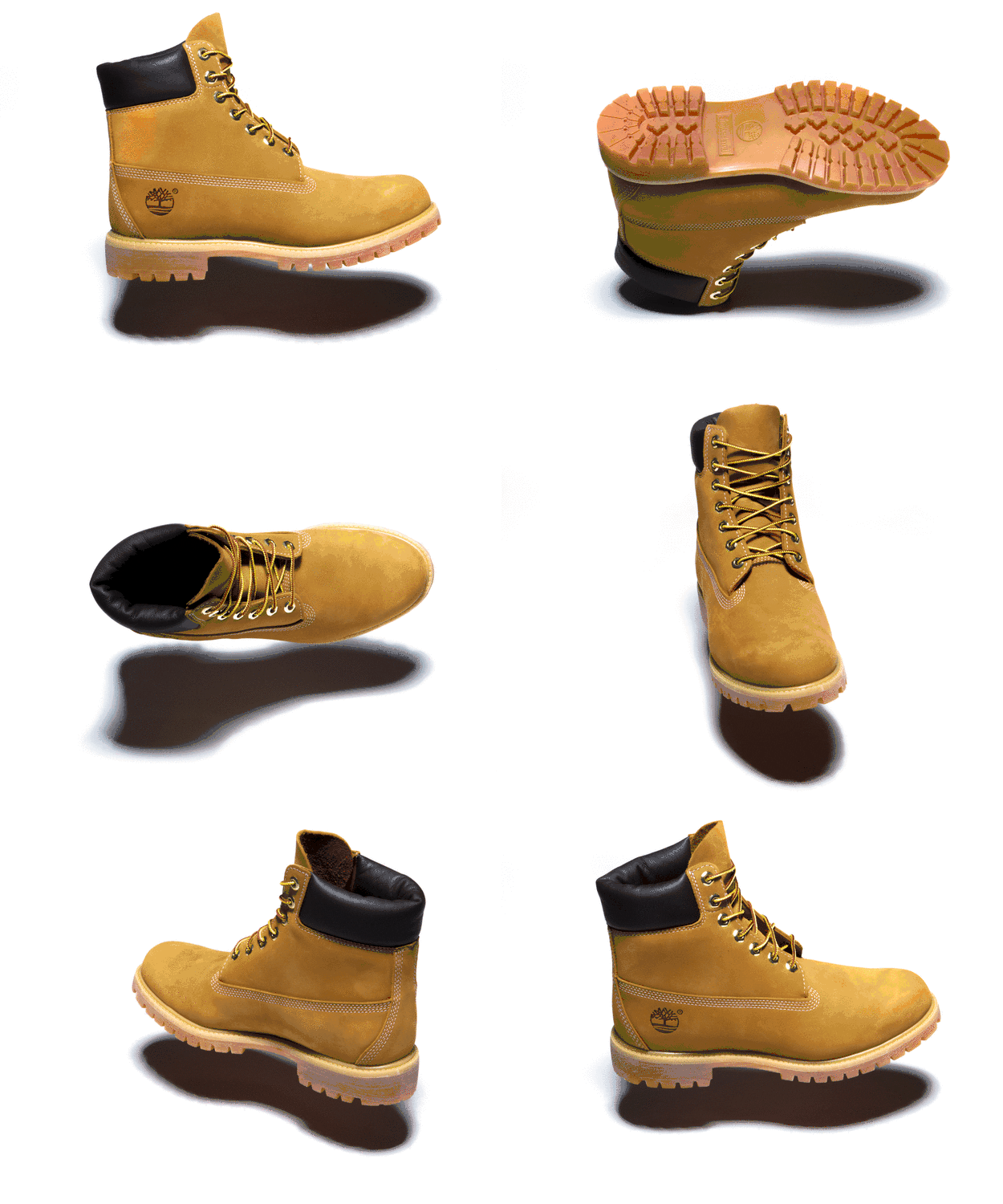

“Timbs,” “Butters,” or “Wheats”—whatever you call them—are a staple in New York fashion and footwear. What many people don’t realize, however, is that these iconic boots originated in Boston, Massachusetts.
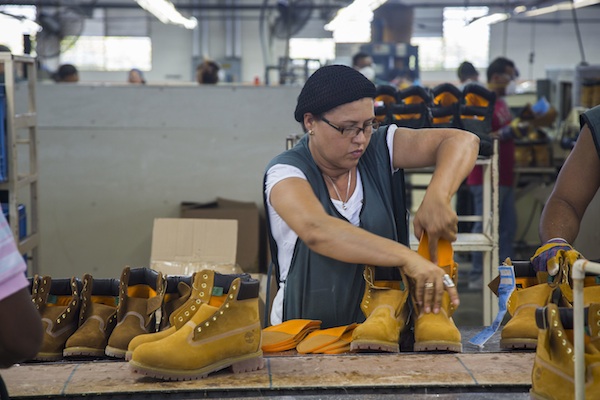
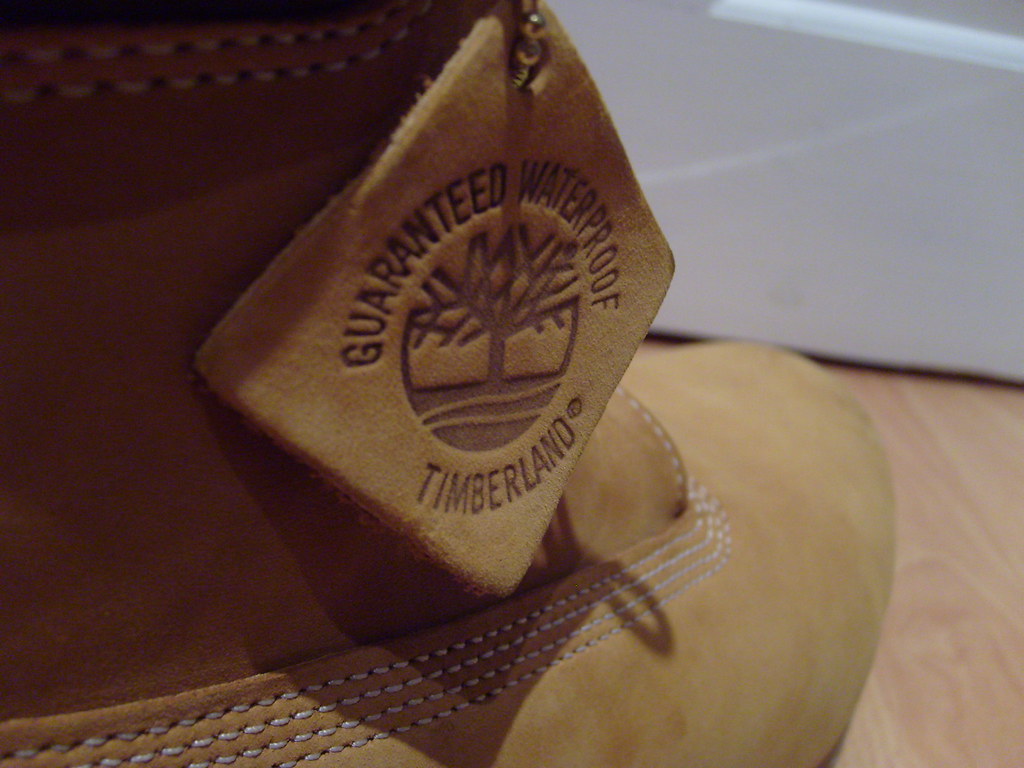
The legacy of Timberland began in 1952, when Nathan Swartz acquired a half-interest in the Abington Shoe Company, located in South Boston. After years of innovation, the company introduced its first fully waterproof leather boot in 1973, marketed under the Timberland name—a groundbreaking achievement in footwear manufacturing. As demand increased, Swartz and his sons expanded operations, and in 1978, the company was officially renamed The Timberland Company.
In its early years, Timberland positioned itself as a premium brand. The boots were initially marketed to consumers seeking rugged durability paired with upscale appeal, making them largely accessible to those with disposable income. That image shifted significantly after Timberland opened its first New York City retail store in 1989, marking the brand’s entry into urban markets. Sales surged almost immediately.

Fashion entrepreneur Daymond John, reflecting on Timberland’s rise during the 1990s, explained its early adoption in inner-city communities:
“It really came from the initial people in the neighborhood who, unfortunately, were probably hustlers in some sense. They had more money to go uptown or downtown to look at the more prestigious brands.”
— Daymond John, interview commentary on 1990s streetwear culture
As Timberlands gained traction in these neighborhoods, they transitioned from functional work boots into powerful symbols of identity and status.
The boots themselves were rooted in New England’s blue-collar tradition, designed for labor-intensive work and harsh winter climates. That functionality became the cornerstone of the brand. However, as footwear fashion evolved in the late 1980s and early 1990s, hip hop culture elevated Timberland into something far greater. The culture connected with the boot’s authenticity—its toughness, durability, and unpolished realism—while also redefining it as a fashion essential.
By the mid-1990s, Timberlands had become inseparable from hip hop. Groups like Boot Camp Clik made the premium 6-inch Timberland boot part of their everyday uniform. DMX famously wore them in the 1998 film Belly, enhancing the gritty realism of his character, Buns. The Notorious B.I.G. frequently wore Timbs and cemented their cultural relevance with lyrics such as,
“Timbs for my hooligans in Brooklyn,”
from his 1997 single “Hypnotize.”
Mobb Deep appeared wearing Timberlands on the cover of their 1995 album The Infamous. Nas referenced the boots in The World Is Yours (1994) with the line,
“Suede Timbs on my feet makes my cipher complete.”
Artists including Wu-Tang Clan and Jay-Z also consistently wore Timberlands throughout the 1990s, solidifying the boot as a defining element of New York street style and accelerating the rise of modern streetwear.
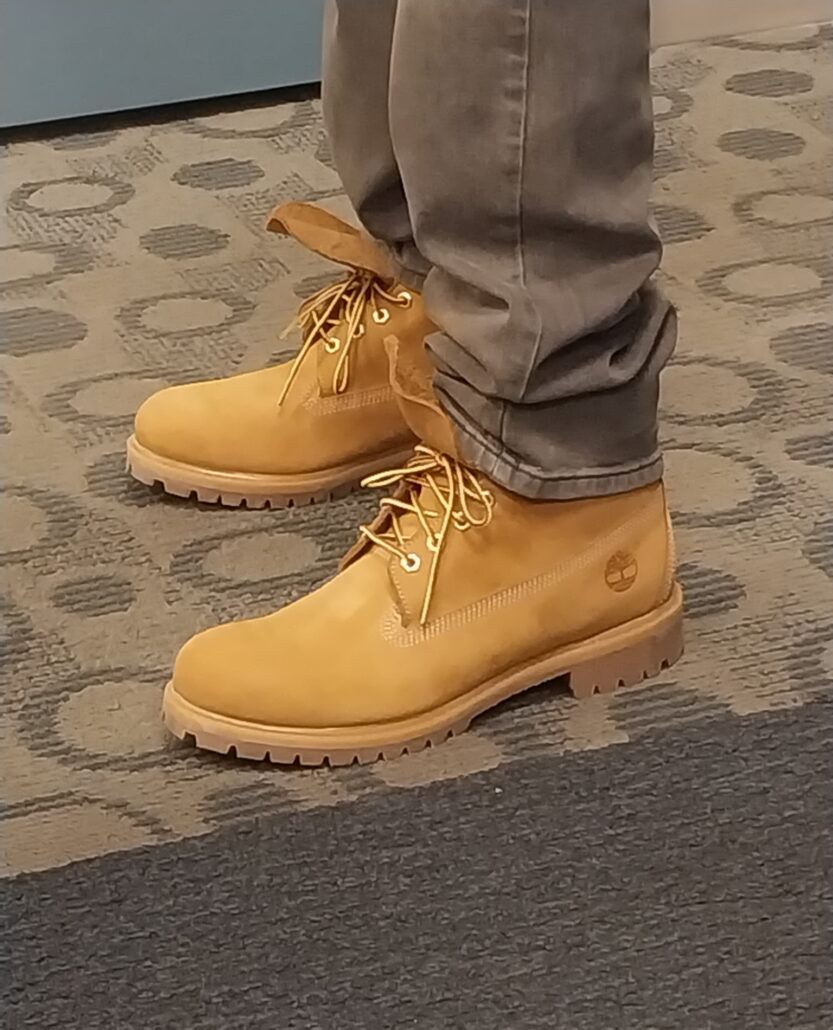
Timberland’s connection to hip hop has endured into the modern era. In the 2010s, Drake released multiple exclusive Timberland collaborations. UK artist Skepta appeared in Timberland’s Hip Hop Royalty campaigns, while Brooklyn rapper Lola Brooke fronted a major Timberland advertising campaign in the early 2020s, reinforcing the brand’s continued relevance. The cultural impact runs so deep that legendary producer Timbaland adopted his stage name in the 1990s, inspired by the brand after being given the nickname by DeVante Swing of Jodeci.
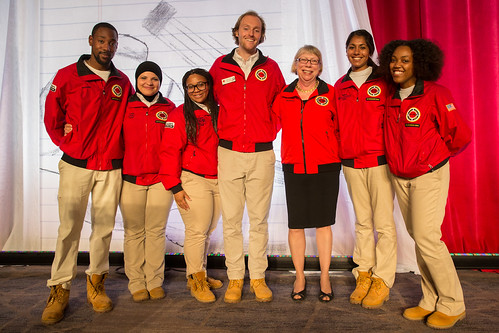
Although the New York–New Jersey–Connecticut tri-state area remains the region most closely associated with Timberland boots today, Boston remains the originator. The city’s connection to the brand was further solidified through Timberland’s partnership with City Year, a Boston-headquartered nonprofit founded in 1988. City Year is an AmeriCorps organization composed of young adults ages 18–24, focused on improving student outcomes through academic and social-emotional support. Timberland began supporting City Year by donating boots, and over time, the iconic Wheat Timberlands became a required part of the organization’s uniform, symbolizing service, unity, and durability.
At its core, the Timberland story underscores the power of Black consumers. While Timberland influenced hip hop’s fashion aesthetic, hip hop—and Black culture—ultimately transformed Timberland into a global icon. That influence also helped pave the way for Black-owned fashion brands such as Rocawear (founded 1999) and Baby Phat (launched in 1999), reinforcing an enduring truth: Black consumers drive fashion trends, shape culture, and define what’s next.